Close

b

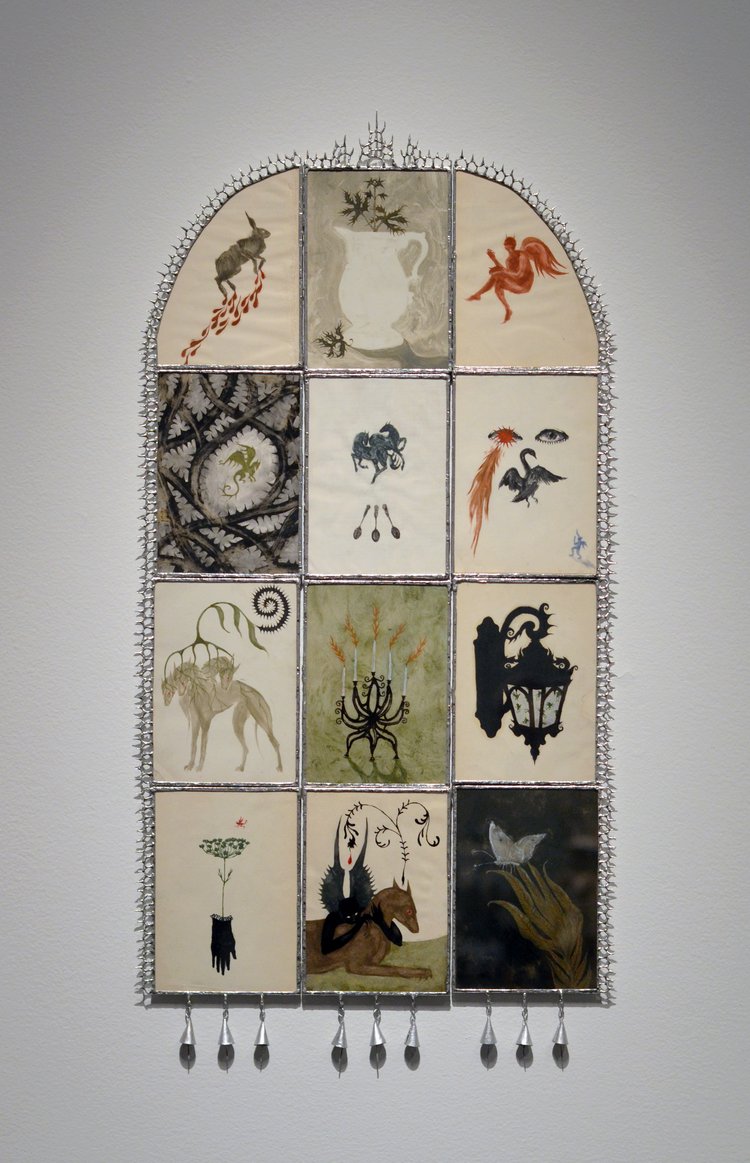
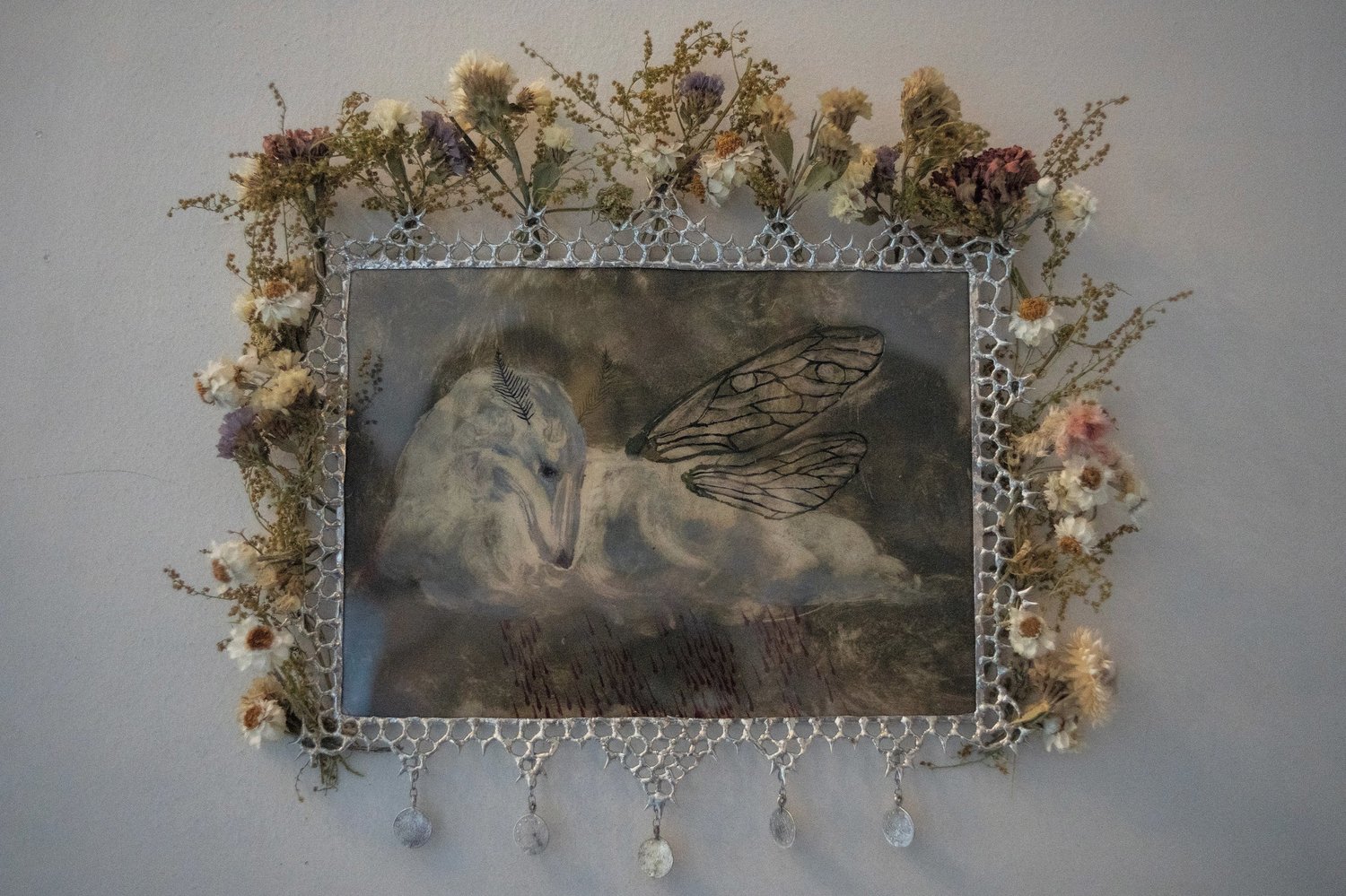
Spiked Relics by Laura Benson

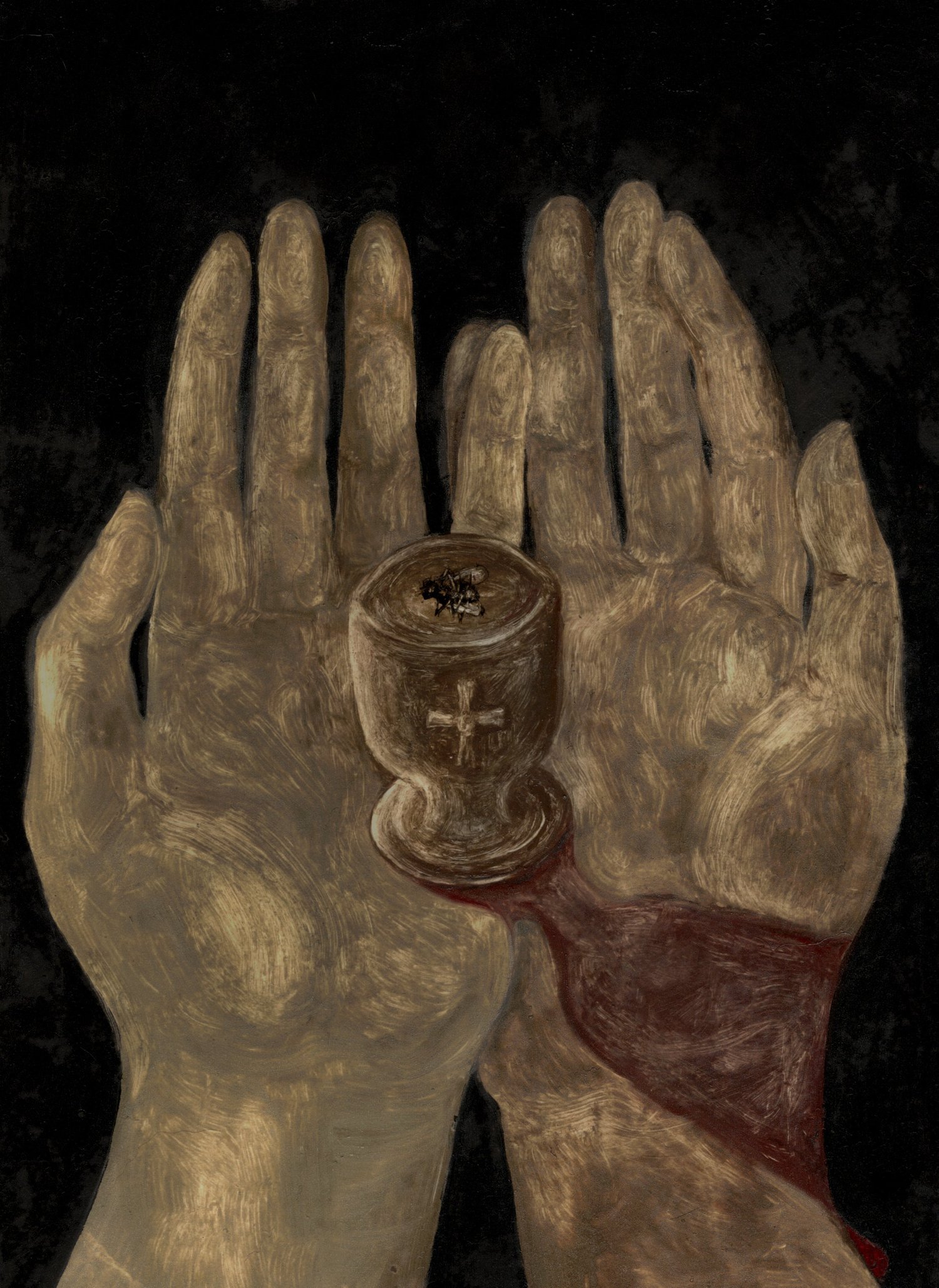
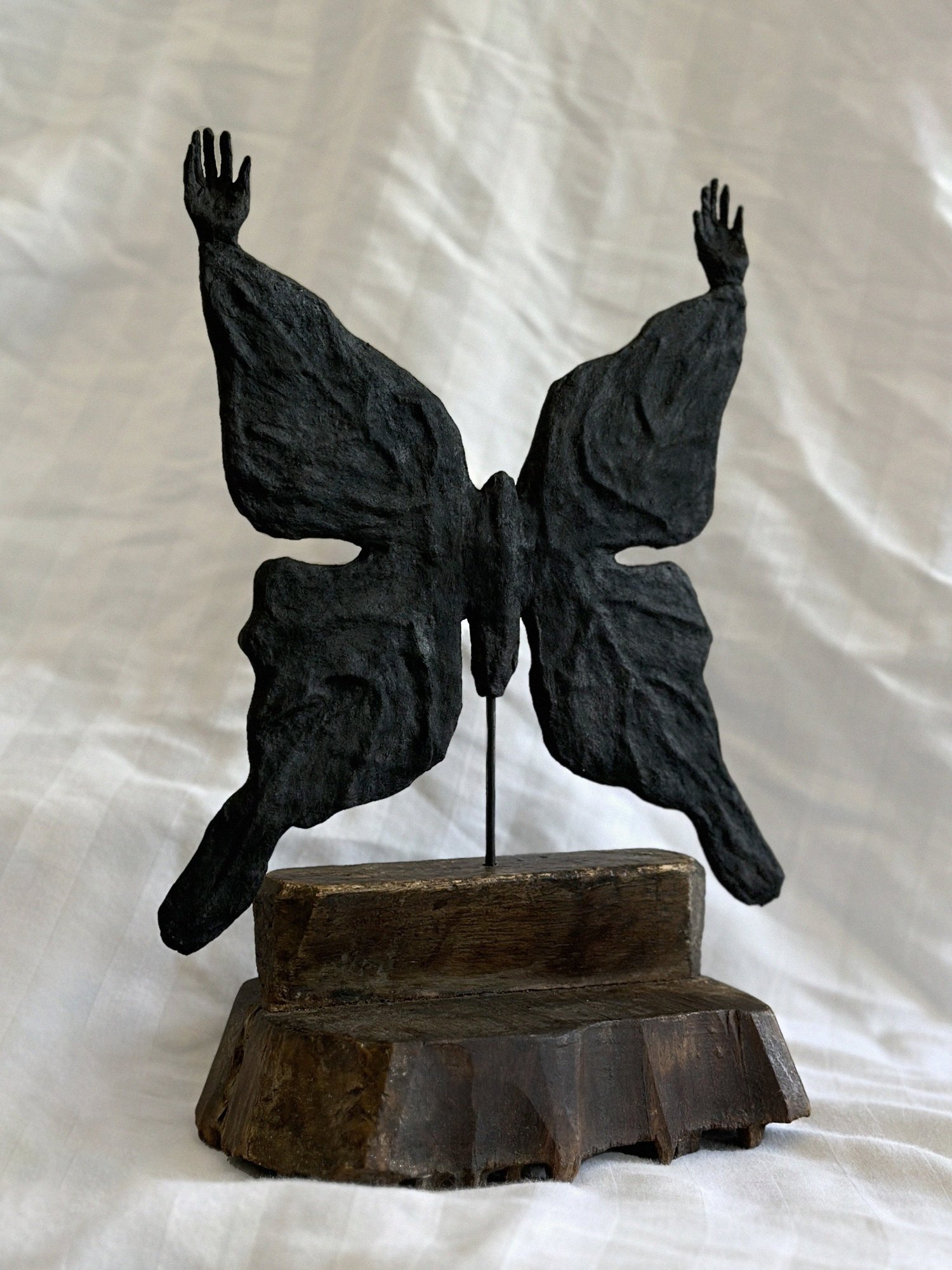
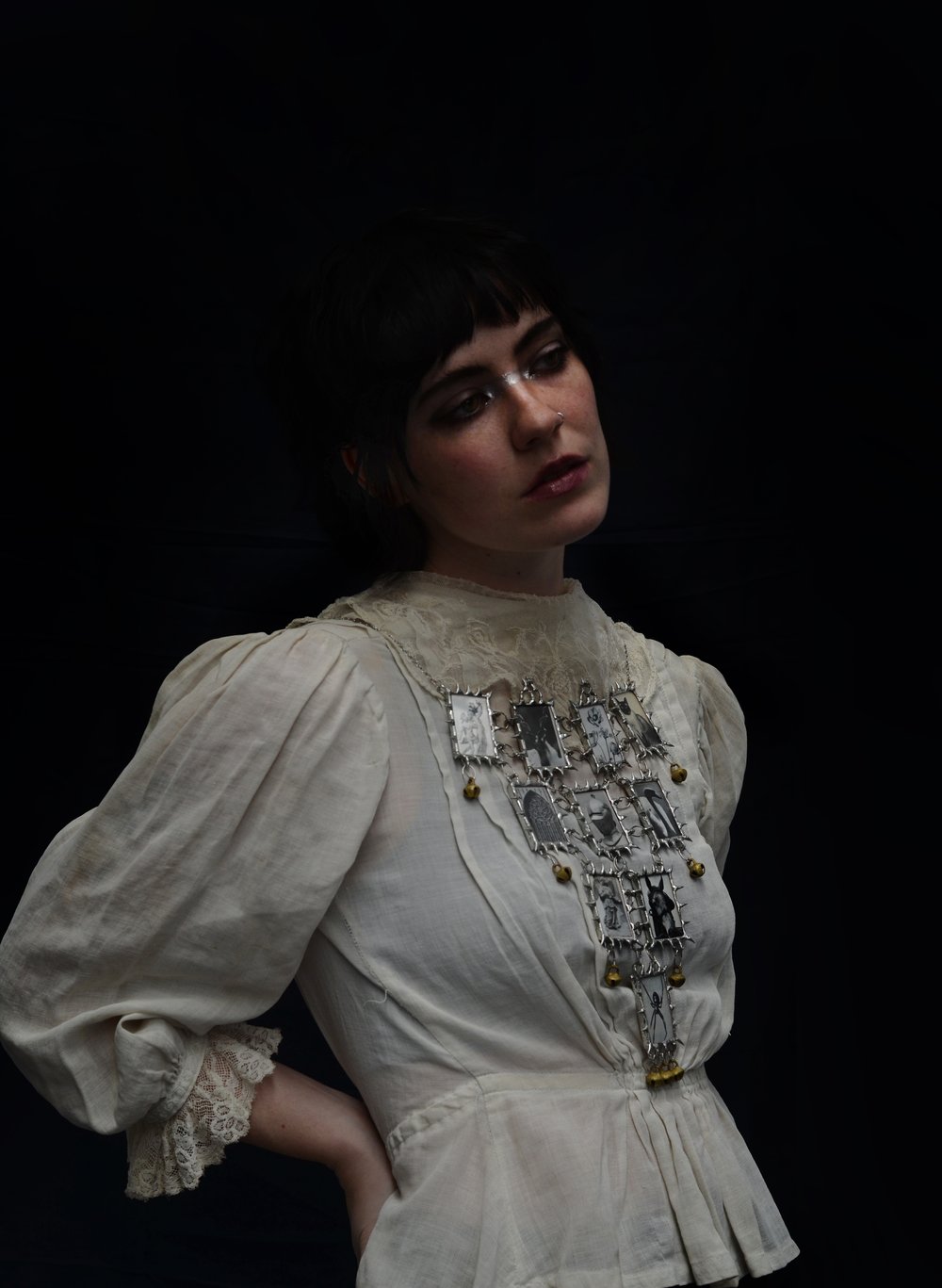
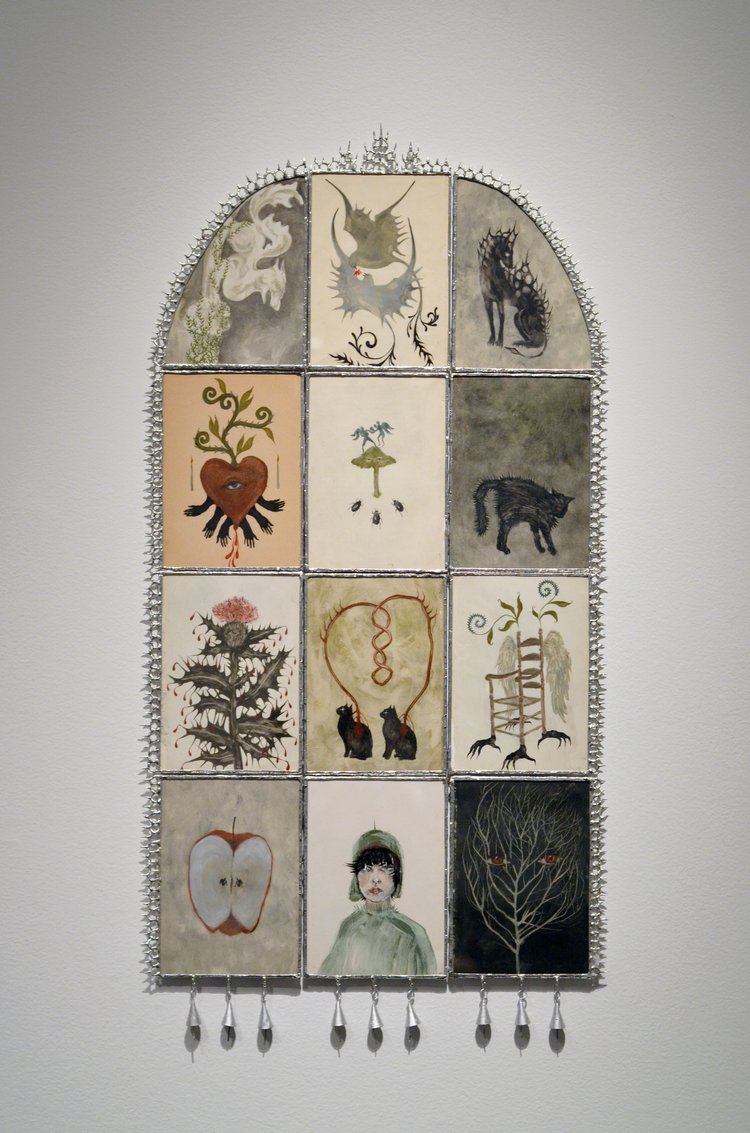
Laura Benson is a remarkable multidisciplinary artist and jewelry-maker. Her illustrations remind me so dearly of medieval art, with their strange little creatures, demons, and religious iconography. Her work is charming, disturbing, with a sense of sacred yet accessible mystery. I love the soldered frames and little pendants holding images of strange import. Surreal and metaphorical, they are imbued with both personal and mythic meaning.

Laura is led by “numinal curiosity… Melding found materials such as wooden clock parts, old book pages, antique charms, wooden textile stamps with processes such as printmaking, spun cotton, metalcasting and soldering…I create scenes and creatures and sentiments which rely upon the compositing effect of intuitive decision-making.” She is particularly focused on “iconography from an epoch of history in which the unknown was a grand and living Thing…”
{See more}

b

Odd Nerdrum

There hardly needs to be any introduction to the legendary Odd Nerdrum, but I just wanted to share some of my favorite paintings by him across the decades. I love Nerdrum’s Neo-Baroque style, reminiscent of Old Masters such as Rembrandt and Caravaggio. His “odd” scenes take place in vast, barren post-apocalyptic spaces, bleak and inhospitable wastelands, softened and elevated by the beauty of his masterly techniques – sometimes dimly seen, with a delicate and translucent suffusing of color. His paintings express primal experiences of the human being, which appears through his lens as a kind of bizarre specimen, seeming alien, absurd, and ominous when viewed outside accepted conventions and interpretations. It is as if they were being observed for the first time, with no preconceived notions, yet with allegorical meaning that also heightens the absurdity.

The strange rituals and psychological contortions of mankind are here depicted with a harsh starkness, but beautifully rendered. His works often portray an enigmatic communal aspect, the empty landscapes dotted with strange figures who seem in some way mere repetitions of each other (as in Dawn and The Singers, where the skull-capped figures are echoed and indistinguishable), harking to some unknown call to obscure and inscrutable phases of experience. They seem to treat of shameful longings, a collective anxiety, amorphous dread, and deformities of the psyche. Nerdrum’s is a world where esoteric and perverse behavior does not seem regarded as such by villages and communities that, while appearing to exist in a post-apocalyptic realm, strongly remind one of past centuries – the sparse communities are exactly as strange and all take part in this alien particularity.

Of his post-apocalyptic works, the biography on Nerdrum’s Website states that his “steppe people live in pact with the elements. All that surrounds them is nameless and must be defined anew….Compositionally, Nerdrum adopted the inverted perspective with centralized figures inspired by 14th-century Russian icons….Perspective distortions akin to those of the Russian icons are evident in The Seed Protectors, where the horizon is curved and seen from a bird’s eye view, while the figures are seen from below.” These perspectives are fascinating, with their simultaneous conveyance of both vastness and unrealistically small focus.

Some of my favorite pieces of his are ones that seemingly take place in extraterrestrial space – “As a child he painted white, resurrecting figures on a black background based on impressions from fever dreams. These visions were now applied to big canvases….as seen in Love Divided and Volunteer in Void, where people float around small planets in an infinite void.” The celestial spaces depart from the brutality of his earthbound landscapes and give outlet to those airy, ethereal qualities that I love, those silky, vaporous, transparent shrouds or veils.

Many of his later works from the 2000s onwards possess a tragic emotional intensity, as in Daddy’s Girl. “The transitions between skin and background melt into each other, as in Five Singing Women, where the faces have become ghostly impersonal due to the hazy effect….The motifs take on an even rougher, more vibrant exterior…staged in a world where the surroundings ravage its inhabitants. The particular way of rendering of arms and legs carries the effect of painted movement – ​​even breathing is depicted in the form of vapor escaping from the mouth… Groups of figures are depicted as one organism… After describing a primitive rebirth in desolate landscapes…it is precisely in the underworld that Nerdrum’s motifs have unfolded in recent years. From this series of paintings, figures appear without clothes and hair on their bodies, as seen in Astray, where pale old men and people in wheelchairs are wandering without aim or meaning.”

Odd Nerdrum’s endless exploration of liminal, indefinable human states has given rise to a remarkable, iconic body of work which is instantly recognizable, although varied and wide-ranging, and continues enduringly impactful and gripping as one of the most original oeuvres of the modern era.

{See more}

b

“Intrusion” by Denise Levertov

After I had cut off my hands
and grown new ones

something my former hands had longed for
came and asked to be rocked.

After my plucked out eyes
had withered, and new ones grown

something my former eyes had wept for
came asking to be pitied.

— Denise Levertov

b

Swan Bride, Wolf Maiden, and Mother House: The Art Dolls of Pantovola

Netherlands-based Pantovola creates the most exquisite dolls and fabric sculptures, of which I’ve never quite seen the like. These marvels of textile art are highly creative, expressive, and melancholy, filled with such a wistful whimsicality. Her teapot ghosts are precious and endearing, and I discovered her through them – but her whole body of work is extremely impressive and extensive. While remaining cohesive and adhering to a singular vision and bearing the unmistakable stamp of the artist, Pantovola dolls display a rich range, exhaling qualities of fairytale daintiness, childlike fantasy, a perturbing, haunting surrealism, mournful tragedy, and emotional intensity. The extravagant imagination and eerie pensiveness behind these dolls speak to both nostalgia for the beautiful and trusting things of childhood, and adult loss with its intricate sufferings and woes. They seem to enshrine awestruck innocence as well as the baleful shedding of innocence, and to envision womanhood as a haunting.

Drawing heavily from childhood and the holy things therein, Pantovola dolls have a certain stylistic aspect of naivete, with the curious proportions of a child’s sensibility. They are, however, detailed to the nth degree, with their faces often possessing a subtly disturbing quality. They are visual metaphors and often frame things within their own torsos, such as bugs, stones, and letters. Pantovola uses antique fabrics and incorporates old objects, adding to the storied look of the dolls – the textures of time on them. With enchanting names like the Lady Amanita, Moth Sisters, Fantôme Misérable, and Sea Pearl Keeper, the dolls fascinate and draw you in with their air of sad whimsy and eccentric imaginativeness. In addition to being an immensely talented dollmaker and textile artist, Pantovola is also a painter whose style translates clearly across mediums.

Pantovola states: In my work I love to use time-worn materials such as antique textiles, handmade lace, and curious objects from my collection….My work touches on topics like beauty and decay, culture versus nature, the cycles of life and death, occultism and witchcraft, dreams, femininity, creativity and the re-enchantment of the world, with a strong reference to childhood memories and a certain nostalgia to it.

{See more}